Are You a Mindfulness Professional or Coach Looking to Grow Your Practice?
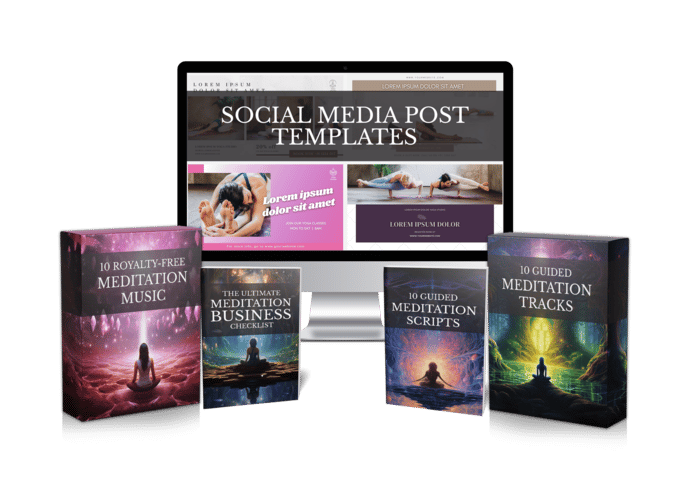
Share your best email address to receive the Meditation Mastery Kit — absolutely free. Inside, you’ll get done-for-you guided meditation scripts, royalty-free meditation tracks, and social media post templates to help you better serve your clients and expand your reach.

IFS Guided Meditation Script for Anxiety: Meet Your Anxious Part With Curiosity Instead of Fighting It
Wednesday, November 11, 2026
Anxiety rarely feels like a visitor we would choose to welcome. It shows up as a tight chest, a racing mind, a stomach that will not settle, and most people respond the only way they know how: by pushing it away, arguing with it or trying to shut it down. This IFS guided meditation script for anxiety offers a different path. Drawing on the Internal Family Systems approach, it invites clients to meet the anxious part with curiosity instead of fighting it, to notice where it lives in the body, to gently ask what it is trying to protect, and then to unblend and rest in the calm, compassionate presence that IFS calls Self-energy. It is written for therapists, IFS-informed coaches, counselors, meditation teachers and wellness professionals who want a soft, structured IFS meditation for anxiety to use in session or to offer as a practice between sessions.
You can use this script at the start of a session to help a client settle, as a gentle introduction to parts work for someone who is new to IFS, or as a recorded practice that clients return to when worry rises during the week. It pairs naturally with an IFS meditation for Self and with other IFS meditation scripts you may already use. The script below is written to be read aloud, word for word, directly to your clients. Please keep in mind that this is a contemplative mindfulness practice, not a treatment for anxiety, and it is not a substitute for professional mental health care, therapy or medical advice. Invite clients to go at their own pace and to stop at any point if the practice feels like too much.
Let’s get started.
IFS Guided Meditation Script for Anxiety:
Find a comfortable position, seated or lying down, in a way that lets your body feel supported. Let your hands rest wherever they feel natural. If it feels right, allow your eyes to close, or simply let your gaze soften and rest on a spot in front of you.
(Pause)
Take a slow breath in through your nose… and let it out gently through your mouth. Once more, breathe in… and breathe out, a little longer this time, as if you are setting something down.
(Pause)
Now let your breath find its own rhythm. There is nothing you need to fix or change. Simply notice the air moving in and out, the rise and fall of your chest and belly.
(Pause for several breaths)
Let your attention drift down through your body. Let your forehead soften. Let your jaw loosen, your tongue resting easily in your mouth. Let your shoulders drop away from your ears. Feel the weight of your body being held by the chair, the cushion or the floor beneath you. You are supported right here.
(Pause)
Now, with kindness, turn your attention toward any anxiety that is with you today. It might be a strong feeling, or only a faint hum of unease. Whatever is here is welcome. You do not need to make it bigger or smaller. Just notice it.
(Pause)
Gently ask yourself, where do I feel this in my body? Perhaps it is a tightness in your chest, a flutter in your stomach, a pressure in your throat, or a restlessness in your hands or legs. Let your attention rest softly on that place, the way you might rest a hand on the shoulder of a friend.
(Pause for several breaths)
As you notice this sensation, you might sense that it belongs to a part of you, an anxious part that has been working very hard. See if you can get a sense of it. It may have a shape, a color, an image, or simply a feeling. However it shows itself is just right.
(Pause)
Now notice how you feel toward this anxious part. You may feel annoyed with it, afraid of it, or eager to make it go away. If so, that is a sign that other parts are here too. Gently ask those parts if they would be willing to step back a little, just for now, so you can get to know the anxious part. They do not have to leave. They can watch from nearby.
(Pause)
Notice if a little space opens up. Check again how you feel toward the anxious part. Perhaps there is a touch of curiosity now, a little openness, or even a softening of the heart. Let yourself rest in that space for a moment.
(Pause for several breaths)
From this calmer place, silently let the anxious part know that you are here. You might say inwardly, I see you. I’m not trying to get rid of you. I’d like to understand you.
(Pause)
Then, with curiosity, ask it a simple question: What are you afraid would happen if you didn’t worry? Or, What are you trying to protect me from?
You do not need to search for an answer. Simply listen. An answer might come as a word, an image, a memory, a feeling, or nothing at all. All of it is fine.
(Pause for several breaths)
If something comes, receive it with warmth. You might discover that this part has been trying to keep you safe, to help you prepare, or to make sure nothing goes wrong. Let it know you understand how hard it has been working. You might say, Thank you for caring about me so much.
(Pause)
Notice how the anxious part responds to being heard rather than fought. Perhaps it relaxes a little. Perhaps it stays just as it is. Either way, let it know it does not have to carry everything alone. You are here now, and you can stay with it.
(Pause)
Now, gently let your attention widen. Sense the one who has been noticing, the calm, steady presence beneath the worry. Feel the qualities that may be here: calm, curiosity, compassion, a quiet sense of clarity. This steady center has been with you the whole time, even when anxiety felt loud.
(Pause for several breaths)
Rest here for a few breaths. Breathe in, and feel that calm presence. Breathe out, and let the anxious part feel your company, like a child sitting beside someone they trust.
(Pause for several breaths)
Before you begin to return, ask the anxious part if there is anything it needs from you in the coming days. Maybe a moment to check in, a slower breath, or a kind word when it starts to rise. Listen for any answer and let it know you will remember.
(Pause)
Thank the anxious part, and thank any other parts that stepped back to make room. Let them know you can come back to this place whenever you need.
(Pause)
Now bring your attention back to your breath. Feel the air moving in and out. Notice the weight of your body, the surface beneath you, the sounds in the room around you.
(Pause)
Begin to invite small movements. Wiggle your fingers and toes. Roll your shoulders gently. If it feels good, take a deep breath in and stretch in whatever way your body asks for.
(Pause)
When you are ready, slowly open your eyes and return to the room, bringing with you a sense of curiosity and kindness toward every part of you, including the part that worries.
Tips for Facilitators
Go slowly and leave generous pauses, especially after the questions to the anxious part, so clients have time to listen inward.
If a client feels flooded or overwhelmed, return to the breath, the feeling of support beneath them and the room around them before continuing, or end the practice there.
After the meditation, offer a few minutes to reflect or journal on what the anxious part shared and what it might need in the days ahead.
Want to Turn This Script Into a Professional Meditation Audio or Video in Just Few Clicks?

Meet Mindful Render, the ultimate A.I. tool for wellness creators. Skip the expensive microphones and editing software—our platform lets you generate studio-quality, ready-to-publish meditation videos or tracks from any text with in minutes. Just paste your script and let Mindful Render bring it to life.
Looking for More Resources to Grow Your Mindfulness Practice or Support Your Clients?
Thanks for reading this article ,If you’re looking for more resources to support your mindfulness practice or enhance your coaching sessions, visit mindfulnesscontent.com. We offer a comprehensive 600+ done-for-you guided meditation script bundle, perfect for professionals who want ready-to-use content to help their clients find peace and clarity. Plus, as a special gift, you can download 10 free guided meditation scripts to get started. Head over to our site to discover more tools and content designed to help you on your journey to mindfulness and wellness.
Looking for a Simple Way to Feel More Calm, Centered, and Inspired?
If you're not using these resources for a coaching practice or business, no worries .The following free resources were created to help you find more peace, healing, and balance, wherever you are in life:
Download The Best Free Meditation App- Manifesty

Access hundreds of powerful guided meditations designed to help you relax, recharge, and manifest the life you desire — anytime, anywhere.
Get Your Free Free Aroma Therapy Starter Kit

Get a free Aromatherapy Guide, Essential Oil Planner, 100+ Recipes, DIY Projects, 25% off our favorite bundle and Everything you need to begin your wellness journey!

About the Author - Nick Tsai
Nick Tsai is a Life Coach, Certified Meditation Coach, and NLP Practitioner. He created MindfulnessContent.com to help coaches grow their practice and make mindfulness more accessible through done-for-you scripts and resources. His mission is to empower both professionals and individuals on their journey to greater clarity, calm, and impact.
Want To Grow Your Mediation Practice?
Click the button below and to receive the Meditation Mastery Kit absolutely free. Gain access to a treasure trove of free guided meditation scripts, tracks, and social media post templates
Resources
Want To Grow Your Mediation Practice?
Get Our Meditation Mastery Kit For Free
Click the button below and to receive the Meditation Mastery Kit absolutely free. Gain access to a treasure trove of free guided meditation scripts, tracks, and social media post templates