Are You a Mindfulness Professional or Coach Looking to Grow Your Practice?
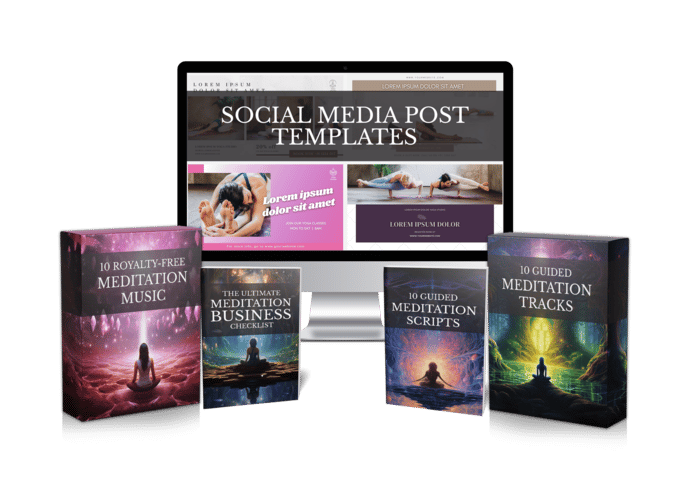
Share your best email address to receive the Meditation Mastery Kit — absolutely free. Inside, you’ll get done-for-you guided meditation scripts, royalty-free meditation tracks, and social media post templates to help you better serve your clients and expand your reach.

How to Write a Guided Meditation Script: A Clear Example Built Around a Warm Fireside Rest
Monday, November 09, 2026

Learning how to write a guided meditation script is less about finding perfect words and more about understanding a quiet, dependable shape. Almost every calming session moves through the same arc: arriving, breathing, softening the body, a central image or practice, a moment of integration, and a gentle return. This guide is written for meditation teachers, yoga instructors, therapists, coaches and wellness professionals who want to write their own scripts with confidence, and it includes a complete example built around a warm fireside rest on a winter evening, so you can see each part of that shape in action.
When you write your own script, keep your sentences short and speakable, use the present tense, address the listener as “you,” and mark your pauses clearly so you never feel rushed. Choose one central image and stay with it, rather than piling up several scenes. The script below is written to be read aloud, word for word, directly to your clients. As you read it, notice where each section begins and ends, how the pauses create space, and how the language moves from the body, to the breath, to the imagination and back again. Then use the same pattern to build scripts of your own.
Let’s get started.
How to Write a Guided Meditation Script:
Find a comfortable position, either sitting or lying down. Let your body be supported by the chair, the cushion or the floor beneath you. There is nowhere else you need to be right now.
When you’re ready, gently close your eyes, or let your gaze rest softly on a spot in front of you.
(Pause)
Take a slow breath in through your nose… and let it go through your mouth, like a long, quiet sigh.
Once more, breathe in… and breathe out, letting a little of the day leave with the breath.
(Pause)
Now let your breathing return to its own natural rhythm. You don’t need to change it or control it. Simply notice the air moving in… and moving out.
Notice the cool air at the tip of your nose as you inhale, and the slightly warmer air as you exhale.
(Pause for several breaths)
Bring your attention to your forehead. Let it smooth and soften. Let your eyes rest heavy in their sockets. Let your jaw loosen, leaving a little space between your teeth.
Let your shoulders drop away from your ears. Feel the weight of your arms, heavy and relaxed, and let your hands rest open and easy.
(Pause)
Notice your chest rising and falling. Let your belly be soft. Let your hips settle down into the surface beneath you.
Feel the warmth and heaviness spreading down through your legs… through your knees… your calves… all the way to your feet.
Your whole body is resting now, supported and safe.
(Pause for several breaths)
Now imagine that it is a quiet winter evening. Outside, snow is falling softly, and the world has grown still and hushed.
You are inside a small, cozy room. In front of you, a fire is burning gently in the hearth.
(Pause)
Notice the soft glow of the flames, amber and gold, flickering slowly. Notice the shadows dancing lightly on the walls.
Listen to the gentle crackle of the wood, and the quiet hiss of the fire as it breathes.
(Pause)
Perhaps you notice a faint scent of pine and woodsmoke in the air, clean and comforting. Breathe it in slowly.
Beneath you is a soft rug, or a deep, comfortable chair. Let your body sink into it a little more with every breath, as though the room itself is holding you.
Beyond the window, the snow keeps falling, quiet and unhurried. There is no rush out there, and no rush in here.
(Pause)
Feel the warmth of the fire reaching you. It touches your face first, then your hands, then your chest. A soft, steady warmth that asks nothing of you.
With each breath in, imagine you are breathing in that warmth. With each breath out, let any tension melt, the way snow softens near the fire.
(Pause for several breaths)
If thoughts drift in, that’s perfectly fine. Simply notice them, like snowflakes passing the window, and let them float by. Then return to the glow of the fire and the rhythm of your breath.
(Pause)
Perhaps you notice a blanket resting beside you. Imagine wrapping it around your shoulders. Feel how soft and heavy it is. Feel how held you are.
In this warm room, there is nothing to fix and nothing to finish. You are allowed to simply rest.
(Pause for several breaths)
Let a quiet phrase settle into your mind, in time with your breath.
Breathing in… “I am warm.”
Breathing out… “I am at rest.”
Breathing in… “I am warm.”
Breathing out… “I am at rest.”
(Pause for several breaths)
Now let the words fade away, and simply enjoy the stillness of this room, the glow of the fire and the steady rhythm of your own breathing.
(Long pause)
As this practice comes to a close, know that this warmth is not only in the room you imagined. It lives inside you. You can return to it any time you take a slow breath and remember the glow of the fire.
(Pause)
Begin to bring your awareness back to your body. Feel the surface beneath you. Notice the sounds in the room around you.
Gently wiggle your fingers and your toes. Perhaps roll your shoulders, or stretch in any way that feels good.
(Pause)
Take one more deep breath in… and let it go.
When you’re ready, slowly open your eyes, and carry this quiet warmth with you into the rest of your evening.
Tips for Facilitators
Map your structure before you write a single line: settling in, breath, body, central image, integration and return, with a rough time for each section.
Read your draft aloud and cut any sentence that feels hard to say in one calm breath; if you stumble, your listener will feel it.
Write your pauses into the script itself and treat them as part of the practice, since silence is often where the deepest rest happens.
Want to Turn This Script Into a Professional Meditation Audio or Video in Just Few Clicks?

Meet Mindful Render, the ultimate A.I. tool for wellness creators. Skip the expensive microphones and editing software—our platform lets you generate studio-quality, ready-to-publish meditation videos or tracks from any text with in minutes. Just paste your script and let Mindful Render bring it to life.
Looking for More Resources to Grow Your Mindfulness Practice or Support Your Clients?
Thanks for reading this article ,If you’re looking for more resources to support your mindfulness practice or enhance your coaching sessions, visit mindfulnesscontent.com. We offer a comprehensive 600+ done-for-you guided meditation script bundle, perfect for professionals who want ready-to-use content to help their clients find peace and clarity. Plus, as a special gift, you can download 10 free guided meditation scripts to get started. Head over to our site to discover more tools and content designed to help you on your journey to mindfulness and wellness.
Looking for a Simple Way to Feel More Calm, Centered, and Inspired?
If you're not using these resources for a coaching practice or business, no worries .The following free resources were created to help you find more peace, healing, and balance, wherever you are in life:
Download The Best Free Meditation App- Manifesty

Access hundreds of powerful guided meditations designed to help you relax, recharge, and manifest the life you desire — anytime, anywhere.
Get Your Free Free Aroma Therapy Starter Kit

Get a free Aromatherapy Guide, Essential Oil Planner, 100+ Recipes, DIY Projects, 25% off our favorite bundle and Everything you need to begin your wellness journey!

About the Author - Nick Tsai
Nick Tsai is a Life Coach, Certified Meditation Coach, and NLP Practitioner. He created MindfulnessContent.com to help coaches grow their practice and make mindfulness more accessible through done-for-you scripts and resources. His mission is to empower both professionals and individuals on their journey to greater clarity, calm, and impact.
Want To Grow Your Mediation Practice?
Click the button below and to receive the Meditation Mastery Kit absolutely free. Gain access to a treasure trove of free guided meditation scripts, tracks, and social media post templates
Resources
Want To Grow Your Mediation Practice?
Get Our Meditation Mastery Kit For Free
Click the button below and to receive the Meditation Mastery Kit absolutely free. Gain access to a treasure trove of free guided meditation scripts, tracks, and social media post templates